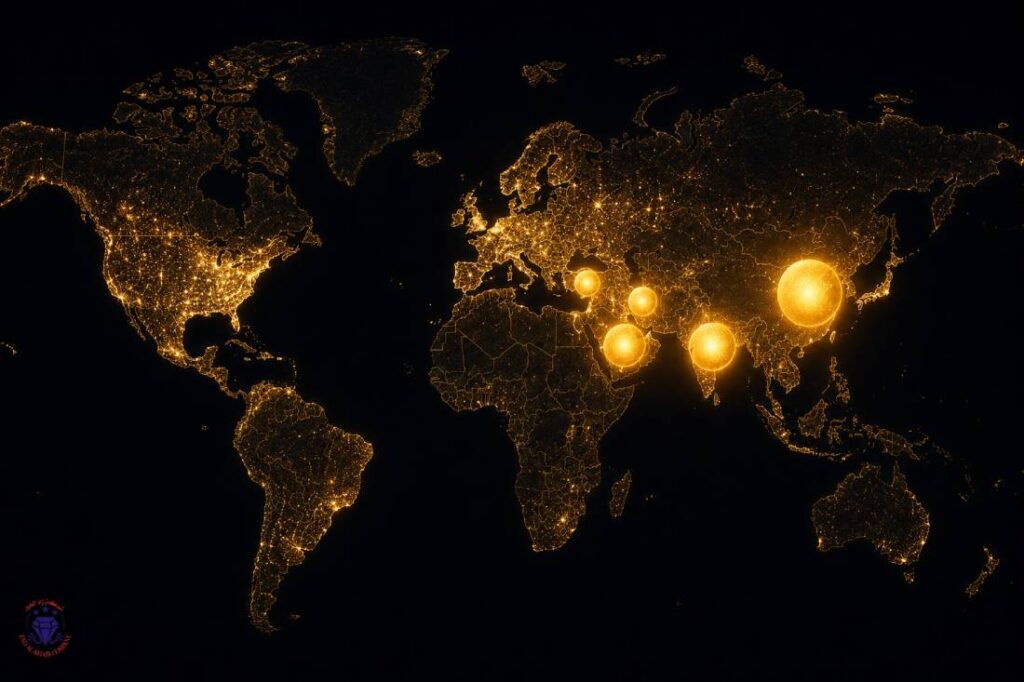
There is a number that got almost no attention this week because everyone was watching oil prices, peace deals, and jobs reports. That number is 1,230.9 tonnes — the total global gold demand for Q1 2026, a record high, up 2% year-on-year, the strongest first-quarter demand ever recorded. While the gold price was being pushed down by inflation fears and rate concerns since February, the actual buyers of physical gold were purchasing at the fastest pace in history.
This is the story that patient, long-term gold buyers need to understand. The price and the demand were moving in opposite directions for months. That happens in gold markets when short-term paper trading — futures contracts, ETFs being sold, speculative positions being unwound — drives the visible price lower despite underlying physical demand being stronger than ever. Central banks continued buying. Jewellery consumers in India, China, the UAE, and Turkey kept purchasing. ETF inflows actually increased in Q1 2026 as institutional investors used price dips as entry points. All of this happened while the headline price was declining.
Now, as a potential US-Iran peace deal brings oil back toward $100 and the inflation-rate pressure on gold begins to ease, the accumulated physical demand that was building during the dip is set to become a price catalyst. Gold is already recovering — trading near $4,739 today, up from below $4,700 this week, with more upside possible as the peace deal develops and NFP data lands this morning.
The practical takeaway for families and investors: the dip was not a warning. It was the world’s best buyers loading up. Goldman Sachs reaffirmed a $5,400 year-end target. J.P. Morgan targets $6,000–$6,300 by end 2026. The record Q1 demand tells you exactly where the informed money went during the correction.